In today’s digital landscape, the demand for scalable and flexible infrastructure solutions is at an all-time high. Infrastructure as a Service (IAAS) has emerged as a pivotal component of cloud computing, offering businesses the ability to access and manage computing resources remotely. However, like any technological solution, IAAS comes with its own set of advantages and disadvantages.
Moreover, with the rise of offshoring as a strategy for development projects, it’s crucial to understand how this practice intersects with IAAS implementation. In this comprehensive guide, we’ll delve into the intricacies of Infrastructure as a Service, examine the potential benefits and drawbacks, and explore the viability of offshoring IAAS development projects.
What is IAAS and How Does it Work?
Understanding the Basics of IAAS
IAAS, or Infrastructure as a Service, is a cloud computing model that provides virtualized computing resources over the internet. This includes fundamental computing resources such as processing power, storage, and networking infrastructure. Essentially, IAAS allows businesses to outsource their entire IT infrastructure, eliminating the need for physical hardware and on-premises data centers.
Instead, organizations can rely on IAAS providers to deliver computing resources on a pay-as-you-go basis, scaling resources up or down as needed. This scalability is particularly advantageous for businesses experiencing fluctuating demand or unpredictable growth patterns. For example, a startup may experience rapid growth in its early stages, requiring additional computing power and storage capacity to accommodate increased user traffic and data processing needs.
Infrastructure as a Service enables startups to scale their infrastructure seamlessly, ensuring that they can meet growing demand without investing in costly hardware upgrades or data center expansions. Moreover, IAAS offers flexibility in resource allocation, allowing businesses to adjust computing resources dynamically in response to changing requirements or workload fluctuations.
Key Components of IAAS Services
The core components of IAAS services typically include virtualization technology, which enables the creation of virtual instances of servers, storage, and networking components. Additionally, IAAS offerings often include a management interface or API through which users can provision, monitor, and manage their virtual infrastructure. This interface provides granular control over computing resources, allowing users to customize their infrastructure to meet specific requirements.
Benefits of Implementin IAAS
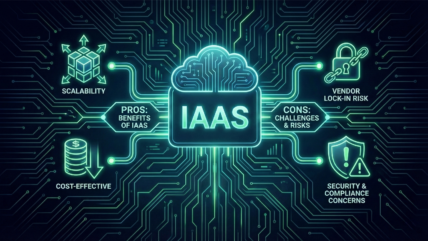
Pros of Utilizing IAAS Services
Scalability
IAAS allows businesses to rapidly scale their infrastructure resources in response to changing demand, ensuring that they have the computing power and storage capacity needed to support their applications and services. This scalability is particularly valuable for businesses with fluctuating workloads or seasonal demand patterns, as it enables them to avoid over-provisioning and reduce costs. Additionally, Infrastructure as a Service offers flexibility in resource allocation, allowing organizations to adjust computing resources dynamically based on workload requirements.
Cost-effectiveness
By leveraging IAAS, organizations can avoid the upfront capital expenses associated with purchasing and maintaining physical hardware. Instead, they can access computing resources on a pay-as-you-go basis, paying only for the resources they use. This cost model enables businesses to align their infrastructure expenses with their actual usage, optimizing cost efficiency and minimizing waste.
Cons to Consider When Choosing IAAS
Despite its numerous benefits, IAAS also presents certain challenges and considerations for businesses. One potential downside is the risk of vendor lock-in, wherein organizations become reliant on a single Infrastructure as a Service provider for their infrastructure needs. This can limit flexibility and make it difficult to migrate to alternative platforms in the future.
Additionally, organizations must consider the potential security implications of outsourcing their infrastructure to a third-party provider. Entrusting sensitive data and critical workloads to an external IAAS provider introduces security risks, including data breaches, unauthorized access, and compliance violations. It’s essential for organizations to thoroughly evaluate the security measures and compliance standards of potential IAAS providers to mitigate these risks effectively.
Moreover, while IAAS offers cost savings compared to traditional on-premises infrastructure, businesses must carefully manage their usage and expenditure to avoid unexpected costs. Overprovisioning resources or neglecting to optimize usage can lead to inflated bills and budget overruns. Also, organizations must consider the indirect costs associated with migrating to Infrastructure as a Service, including training staff, updating processes, and integrating existing systems. These hidden costs can impact the overall return on investment (ROI) of adopting IAAS and should be factored into the decision-making process.
How IAAS Fits into Cloud Computing
Within the broader landscape of cloud computing, IAAS occupies a central role as the foundational layer of infrastructure services. Alongside Platform as a Service (PAAS) and Software as a Service (SAAS), IAAS forms the three primary service models of cloud computing. PAAS provides a platform for developers to build, deploy, and manage applications without worrying about the underlying infrastructure, while SAAS delivers ready-to-use software applications over the internet. Infrastructure as a Service, on the other hand, focuses on providing virtualized computing resources, such as servers, storage, and networking, to enable organizations to build and manage their own infrastructure in the cloud.
By offering fundamental computing resources on-demand, IAAS lays the groundwork for building scalable, flexible, and cost-effective cloud solutions. Organizations can leverage IAAS to deploy a wide range of workloads, from simple web applications to complex enterprise systems, without the need for upfront investment in hardware or data center infrastructure. This enables businesses to innovate more rapidly, scale more efficiently, and adapt to changing market conditions with greater agility.
Offshore Development and IAAS: Is it the Right Move?
Benefits and Challenges of Offshoring IAAS Projects
Offshoring IAAS development projects can offer numerous benefits for businesses, including cost savings, access to global talent pools, and around-the-clock development cycles.
Pro: Global Talent Pool
By leveraging IAAS in conjunction with offshore development teams, organizations can tap into a vast talent pool of skilled professionals from diverse geographical locations. This enables businesses to access specialized expertise and niche skills that may not be readily available in their local markets.
Pro: Lower Budget
Offshoring Infrastructure as a Service projects can result in significant cost savings, as labor costs in offshore locations are often lower than in developed countries. This cost-effectiveness allows businesses to allocate resources more efficiently and invest in other areas of their operations.
Pro: Around-the-Clock Development Cycles
Furthermore, offshoring IAAS projects enables organizations to leverage time zone differences to their advantage, facilitating around-the-clock development cycles. With teams distributed across different regions, businesses can ensure continuous progress on their IAAS projects, accelerating time-to-market and enhancing competitiveness. Additionally, offshoring can promote cultural diversity and foster innovation within teams, leading to fresh perspectives and creative solutions to complex challenges.
Con: Communication Challenges & Data Security
One of the primary challenges is managing communication and collaboration across distributed teams. Differences in time zones, languages, and cultural norms can lead to misunderstandings and communication barriers, impacting project coordination and efficiency. Additionally, ensuring data security and compliance with regulatory requirements becomes more complex when working with offshore teams, as organizations must navigate diverse legal frameworks and data protection regulations.
Con: Concerns about Quality Control
Moreover, offshoring may introduce risks related to quality control and project management, as businesses must rely on external providers to deliver high-quality work within specified timelines. It’s essential for organizations to establish robust governance frameworks and implement effective project management practices to mitigate these risks effectively.
Best Practices for Successful Offshoring of IAAS
To maximize the success of offshoring IAAS projects, it’s essential to adhere to best practices and implement effective strategies. Communication is key when working with offshore teams, as clear and consistent communication helps to align project objectives, expectations, and deliverables across distributed teams. Establishing regular communication channels, such as video conferences, email updates, and project management tools, facilitates collaboration and transparency, enabling teams to stay synchronized and address any issues promptly.
Also, organizations should invest in building strong relationships with offshore partners and fostering a culture of trust and mutual respect. This includes conducting thorough due diligence when selecting offshore providers, and assessing their capabilities, experience, and track record. Building trust through open and honest communication and demonstrating commitment to the partnership fosters a collaborative environment where both parties can work together effectively towards shared goals.
Furthermore, effective project management practices are essential for overseeing offshored IAAS projects and ensuring successful outcomes. This includes establishing clear project objectives, defining roles and responsibilities, and setting realistic timelines and milestones.
Moreover, organizations should prioritize knowledge transfer and skill development to empower offshore teams and facilitate continuous improvement. Providing comprehensive training and professional development opportunities ensures that offshore teams have the necessary skills and expertise to deliver high-quality work consistently.
Comparing IAAS with Other Cloud Computing Models
PAAS vs. IAAS: Which Model Suits Your Business Needs?
When comparing PAAS and IAAS, it’s important to consider the specific requirements and objectives of your business. PAAS offers a higher level of abstraction, allowing developers to focus on application development without worrying about the underlying infrastructure. This can accelerate time-to-market for applications and streamline the development process by abstracting away the complexities of managing servers, storage, and networking.
However, PAAS may not be suitable for all types of applications, particularly those with specific customization requirements or legacy dependencies. In contrast, IAAS provides more flexibility and control over infrastructure configurations, allowing businesses to tailor their environments to meet specific performance, security, and compliance requirements. While IAAS requires more involvement in managing infrastructure components, it offers greater versatility and scalability for organizations with diverse application portfolios and evolving business needs.
SAAS Integration with IAAS for Enhanced Service Delivery
Integrating SAAS solutions with IAAS infrastructure can unlock significant benefits for organizations, enabling seamless scalability, enhanced performance, and simplified management. By leveraging IAAS to host SAAS applications and services, businesses can achieve greater flexibility and agility in scaling resources to meet fluctuating demand. IAAS provides a scalable and reliable foundation for hosting SAAS applications, ensuring high availability and performance for end-users. Additionally, integrating SAAS with IAAS enables businesses to centralize management and streamline operations by consolidating infrastructure resources and standardizing deployment processes. This integration empowers organizations to deliver a superior user experience, reduce operational overhead, and accelerate innovation by focusing on core business objectives rather than infrastructure management.
Private vs. Public Cloud IAAS Solutions: Finding the Right Fit
Private and public cloud IAAS solutions each have their own advantages and considerations, and the choice between them depends on factors such as security requirements, compliance needs, and budget constraints. Private cloud IAAS solutions offer greater control and customization over infrastructure configurations, making them suitable for organizations with stringent security and compliance requirements or specialized workloads that require dedicated resources.
Private cloud deployments provide enhanced data privacy and regulatory compliance capabilities, allowing businesses to maintain greater control over sensitive data and meet industry-specific regulatory mandates. However, private cloud solutions may require higher upfront investments in infrastructure and ongoing maintenance costs.
On the other hand, public cloud IAAS solutions offer scalability, cost-effectiveness, and global reach, making them ideal for businesses seeking agility and flexibility in scaling resources to meet dynamic demand. Public cloud providers offer a wide range of services and deployment options, enabling organizations to leverage economies of scale and access innovative technologies without the need for upfront capital investment.
While public cloud IAAS solutions may raise concerns about data security and compliance, reputable providers offer robust security measures, compliance certifications, and service level agreements (SLAs) to address these concerns. By evaluating their security, compliance, and budgetary requirements, businesses can determine whether a private or public cloud IAAS solution is the right fit for their specific needs and objectives.
Hire Expert IAAS Developers with Coder Staffing
Benefits of Outstaffing for IAAS Development
Outstaffing through Coder Staffing offers numerous advantages for businesses seeking to augment their IAAS development teams. By partnering with Coder Staffing, organizations gain access to a diverse talent pool of experienced IAAS developers without the need to navigate the complexities of traditional hiring processes. This streamlined approach enables businesses to quickly scale their IAAS development capabilities and meet project demands effectively.
Additionally, Coder Staffing allows organizations to tap into specialized expertise and niche skills that may be scarce or unavailable in their local talent market, ensuring that they have the resources needed to tackle complex IAAS projects with confidence.
Expert Recruiters and Extensive Database at Your Fingertips
One of the key benefits of outstaffing through Coder Staffing for IAAS development is access to expert recruiters and an extensive database of skilled professionals. Coder Staffing specializes in sourcing, vetting, and onboarding top-tier talent, ensuring that businesses have access to the best IAAS developers available.
With expert recruiters focusing on each project’s specific needs, organizations can rest assured that their IAAS development teams are composed of highly qualified individuals who possess the necessary skills and experience to deliver exceptional results. Moreover, our extensive database of skilled professionals allows businesses to quickly identify and onboard talent that aligns with their specific project requirements, accelerating the recruitment process and minimizing time-to-market for IAAS solutions.
Technical Consulting and Needs Assessment
Additionally, Coder Staffing offers technical consulting and needs assessment services to help businesses identify their IAAS development requirements and devise tailored solutions. Whether it’s optimizing infrastructure architecture, implementing best practices for cloud deployment, or addressing specific technical challenges, Coder Staffing leverages the expertise to guide organizations through the development process of Infrastructure as a Service.
By conducting comprehensive needs assessments and technical evaluations, Coder Staffing identifies opportunities for improvement, recommends effective strategies, and tailors IAAS solutions to meet the unique needs and objectives of each business. This collaborative approach ensures that organizations can maximize the value derived from their IAAS investments and achieve their long-term goals more effectively.
Hassle-free paperwork & Cost Transparency
Outstaffing arrangements with Coder Staffing focus on simplifying paperwork and pricing structures, thus minimizing administrative overhead and ensuring cost transparency. This allows businesses to focus on their core activities without being burdened by the complexities of traditional hiring processes. Coder Staffing handles all aspects of payroll and compliance management, relieving organizations of administrative burdens and ensuring compliance with legal and regulatory requirements.
Additionally, transparent pricing structures provided by Coder Staffing provide businesses with clarity and predictability regarding the costs associated with IAAS development, enabling better budget planning and resource allocation. By partnering with Coder Staffing, organizations can streamline their development initiatives and achieve greater efficiency and cost-effectiveness in their operations.
Conclusion
In conclusion, IAAS represents a powerful and versatile solution for businesses seeking to leverage cloud computing for their infrastructure needs. By understanding the nuances of IAAS, including its advantages and disadvantages, as well as its intersection with offshore development practices, organizations can make informed decisions about their IT strategies. Whether opting for IAAS, PAAS, or SAAS solutions, businesses must carefully evaluate their requirements and objectives to determine the most suitable approach.
Partnering with reputable providers and leveraging outstaffing services can further enhance the success of IAAS development projects. Ultimately, by harnessing the potential of IAAS, businesses can achieve greater flexibility, scalability, and efficiency in managing their infrastructure resources, driving innovation and growth in the digital age.